Brew Temperature Finder
Use temperature as a small dial, not a magic number.
Choose the method, roast level, and what you taste. Measured Bloom will give you a practical starting temperature and one small hotter-or-cooler adjustment.
Next move
Start here and keep the other variables steady.
A practical manual-brewing starting zone is 195–205°F (91–96°C).
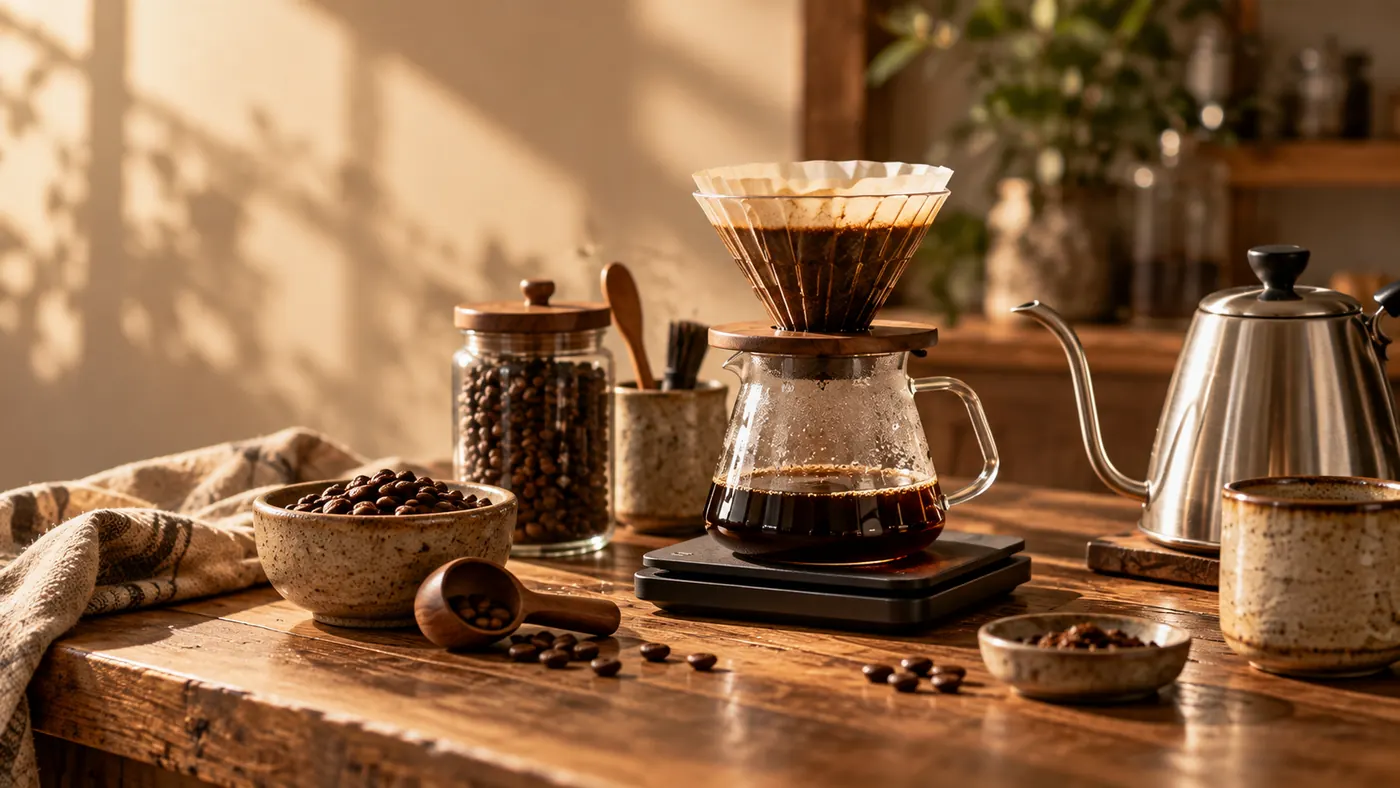
Coffee brew temperature chart
Use this chart as a fast starting reference, then use the finder above when roast level or taste gives you a reason to move a few degrees. The ranges are intentionally practical rather than presented as universal perfect temperatures.
| Brew method | Starting point | Useful range | How to use it |
|---|---|---|---|
| Pour over | 200°F / 93°C | 195–205°F / 91–96°C | Start here, then move only a few degrees if taste points clearly hotter or cooler. |
| Drip coffee maker | 200°F / 93°C | 198–205°F / 92–96°C | This finder stays inside the SCA home-brewer contact-temperature reference. |
| French press | 200°F / 93°C | 195–205°F / 91–96°C | Use steep time and grind together with temperature rather than chasing one exact number. |
| AeroPress | 185°F / 85°C | 170–195°F / 77–91°C | AeroPress publishes 185°F for light/medium roasts and 175°F for dark roasts as starting points. |
| Espresso | 200°F / 93°C | 194–203°F / 90–95°C | Treat the machine setting as a repeatable reference; puck temperature is not identical on every machine. |
The useful range is wider than one perfect number
The SCA Certified Home Brewer requirement measures water where it contacts the coffee and requires it to reach 92°C, stay at or above that temperature, and never exceed 96°C during the brew cycle. That is a useful reference for hot filter coffee, not a command that every manual recipe must use the same exact temperature.
Temperature is not the whole extraction story
SCA-published research found that when brew strength and extraction were controlled, sensory differences from brew temperature alone were smaller than many brewers expect. That is why this finder makes small adjustments and asks you to keep the other variables steady rather than treating hotter or cooler water as a cure-all.
AeroPress is intentionally different
AeroPress publishes lower starting temperatures than the common hot-filter range: 185°F (85°C) for light and medium roasts and 175°F (80°C) for dark roasts. The finder preserves those method-specific starting points instead of forcing every brewer into the same 195–205°F window.
Espresso temperature is machine-dependent
Breville lists a 194–203°F (90–95°C) recommended espresso range and notes that the best setting depends on the coffee's origin, freshness, and roast. Machine temperature settings do not always equal the exact temperature inside the puck, so use the result as a repeatable machine setting rather than a laboratory measurement.
Brew temperature FAQ
What temperature should I use for pour-over coffee?
A practical starting range is about 195–205°F (91–96°C). Start near 200°F, then move only a few degrees at a time if the cup tastes sour, weak, bitter, or dry.
What temperature does the SCA require for certified home brewers?
The SCA certification requirement says water at the coffee grounds must reach 92°C within the first minute, remain at least 92°C, and never exceed 96°C during the brew cycle.
What temperature should I use for AeroPress?
AeroPress recommends 185°F (85°C) as a starting point for light and medium roasts and 175°F (80°C) for dark roasts.
Should light roasts use hotter water than dark roasts?
As a practical starting heuristic, lighter roasts often tolerate or benefit from slightly hotter water while darker roasts often need less heat because they extract more readily. Treat the change as a small nudge rather than a fixed rule.
If my coffee tastes balanced, should I change the temperature anyway?
No. A balanced cup does not need to be moved toward a textbook number. Temperature is one brewing variable, not a score.
References:SCA Certified Home Brewer requirements·SCA — Brewing temperature and sensory profile·AeroPress temperature guidance·Breville espresso temperature guidance