Espresso Dial-In Assistant
Change one thing. Pull a better next shot.
Describe the shot you just made. Measured Bloom will combine dose, yield, time, taste, roast level, basket type, and flow clues to suggest the single adjustment most worth trying next.
Shot snapshot
What happened?
Taste leads the diagnosis. Shot time and flow are supporting clues, not pass/fail scores.
Compare the next shotSave this shot as a temporary baseline, pull again, then change the fields above. Nothing is stored after you refresh or leave the page.
Shot-to-shot
What changed?
Yield0 g
Time0 s
Ratio0
Baseline saved. Pull the next shot.
After the next shot, update the measurements, taste, and flow above. This comparison will update automatically.
This is a decision aid, not a lab measurement.Espresso can taste off because of coffee age, water, temperature, grinder limits, basket fit, machine behavior, or uneven extraction. If the clues conflict, the assistant deliberately recommends checking consistency before making a large recipe change.
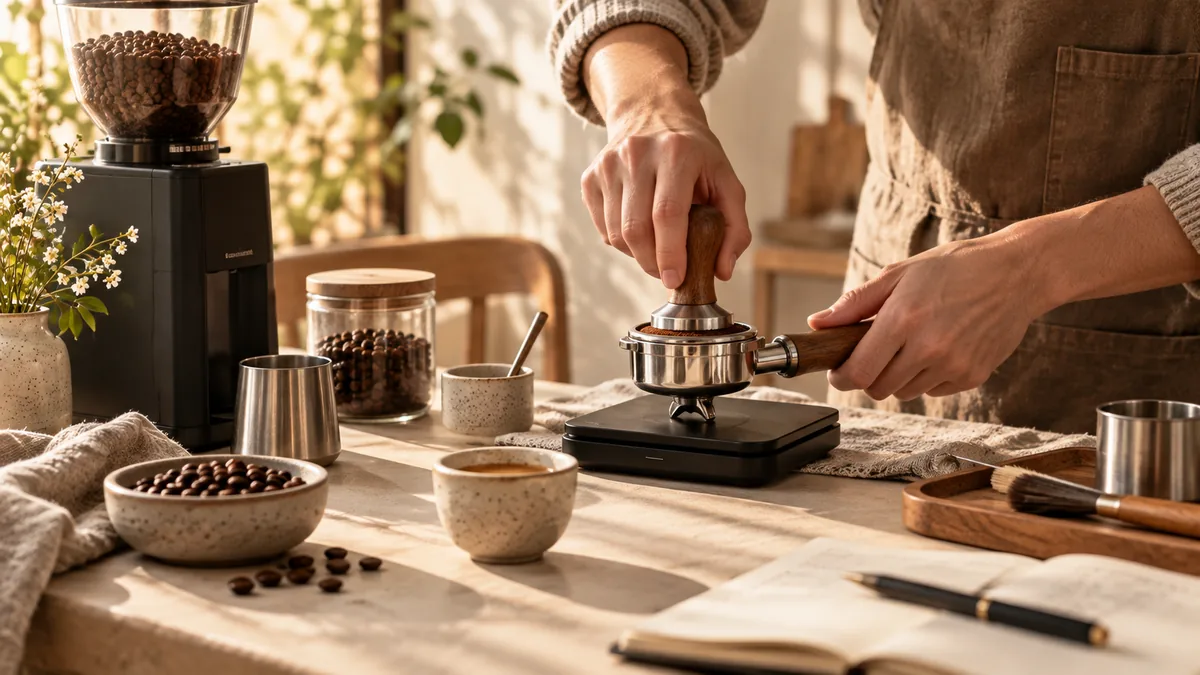
How the assistant decides what to change
The logic follows a simple hierarchy: first look for obvious uneven extraction, then use taste, then use shot time and brew ratio as supporting evidence. When the shot is sour or thin and clearly fast, a slightly finer grind is usually the cleanest next test. When it is bitter or dry and clearly slow, a slightly coarser grind is usually the cleanest next test.
Why sour and bitter together is different
When an espresso tastes both sour and bitter, changing grind alone can make the diagnosis worse. Uneven extraction can create under-extracted and over-extracted areas in the same puck, so this assistant asks you to improve distribution and tamp consistency before chasing the recipe.
Why roast level only nudges the recommendation
Lighter roasts often tolerate or benefit from larger ratios and longer extractions, while darker roasts are generally easier to extract. The assistant uses roast level only when the stronger clues are ambiguous; it does not assume that every light roast or dark roast wants the same recipe.
Why basket type changes the diagnosis
A standard single-wall basket lets grind, dose, distribution, and the coffee puck create most of the resistance. A dual-wall or pressurized basket adds resistance at the basket outlet, so the same fast/slow flow clues cannot be interpreted in exactly the same way. When you select a pressurized basket, Measured Bloom deliberately puts more weight on taste and dose-to-yield ratio and less weight on shot time.
Measured Bloom principle: make one small change, keep the other variables steady, pull again, and taste again.
Espresso dial-in FAQ
How do I dial in espresso?
Keep the dose stable, weigh the beverage yield, note shot time and flow, taste the shot, then change one variable at a time. Use taste as the main signal and time as a supporting clue.
What should I change if my espresso runs too fast and tastes sour?
Once dose, target yield, and puck preparation are repeatable, make a small grind adjustment finer and pull the same recipe again.
What should I change if my espresso runs too slow and tastes bitter or dry?
Once the recipe and puck preparation are repeatable, make a small grind adjustment coarser while keeping dose and target yield unchanged.
Why does my espresso taste sour and bitter at the same time?
Sour and bitter flavors together can point to uneven extraction. Improve distribution and tamp consistency and repeat the same recipe before making a large grind or yield change.
Does espresso have to finish in 25 to 30 seconds?
No. Shot time is a useful reference, especially when a shot is extremely fast or slow, but a balanced shot outside a textbook window can still be good. Taste, ratio, flow, and repeatability matter too.
Does a pressurized basket change how I should dial in espresso?
Yes. A dual-wall or pressurized basket adds resistance at the basket outlet, so shot time and flow are less direct indicators of grind than they are with a standard single-wall basket. Use a stable dose and yield and let taste lead the next adjustment.
References:Barista Hustle Espresso Compass·Clive Coffee — Dialing In Espresso by Taste·La Marzocco Home — Dialing in a Modern Espresso·Breville — Single Wall vs Dual Wall filter baskets